
Financing Property in Ibiza
An independent perspective on financing high-value Ibiza acquisitions — written for internationally mobile buyers, entrepreneurs, family offices and their advisors, where discretion, timing and lender selection matter more than the headline rate.
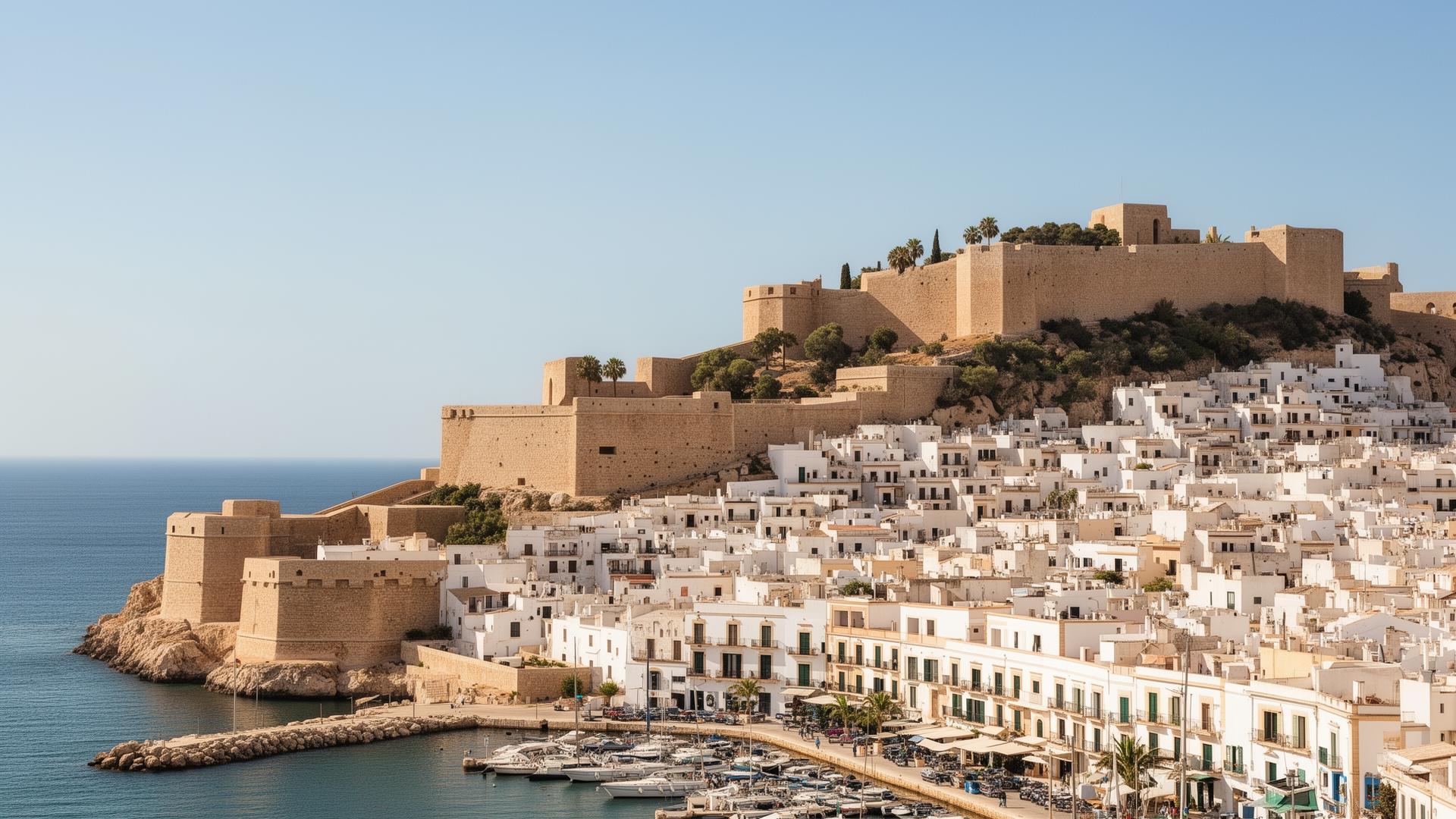
Ibiza is a market where the interesting questions are rarely about the standard mortgage product. They are about how the transaction is priced, how it is structured, and how much of the client's wider balance sheet needs to be visible to make the file work. The questions below are the ones I hear most often before a first bank contact.
The property will be gone in a week. Can financing move that quickly?
Sometimes — but speed on Ibiza is almost always a function of what was prepared before the property appeared, not of pressure applied to a bank at the end. Where you have an existing private-banking relationship or a portfolio that can be pledged, a drawing can be arranged in days. Where a new Spanish mortgage is needed, three weeks is optimistic and eight is realistic. The buyers who move fastest on this island are the ones who established their financing route while they were still looking. If you are already in a bidding situation, the honest first question is whether a cash close and a considered refinancing afterwards serves you better.
Can I buy in cash first and arrange financing afterwards?
Frequently the right sequence here. A cash close secures the property; the financing is then built without a deadline, which usually produces a better structure than anything agreed under pressure. What shapes the outcome is the seasoning period each lender expects after purchase, how the villa is valued once you already own it, and how the origin of the original funds is documented — the last point matters more on Ibiza than most buyers expect. It is worth knowing roughly what the refinancing will look like before the money leaves, because a few decisions taken at signing quietly determine what is available twelve months later.
Can my investment portfolio carry the purchase without moving money into Spain?
Often, yes, and for many Ibiza buyers that is the more elegant answer. A portfolio held in Luxembourg, Switzerland or Monaco can support a Lombard facility, or the same house can lend against the property while the assets stay where they are. It keeps the transaction inside a relationship that already knows you, avoids liquidating positions at an inconvenient moment, and tends to be considerably quicker than a Spanish underwriting process. The economics depend on what the portfolio actually holds and in which currency — a concentrated position or an illiquid fund is a different conversation from a diversified mandate.
Can I buy through a holding company, trust or foundation?
Yes, though the vehicle materially changes who will lend. Some Spanish houses do not finance corporate buyers on the island at all; others prefer them because the analysis is cleaner. Trusts and foundations narrow the field further and are read very differently depending on where the trustee sits. The ownership decision belongs with your lawyer and tax advisor — but the financing consequences need to be on the table before it is signed, because reversing a structure after the offer is accepted is expensive and slow. Where a structure limits the field, it is usually possible to finance around it rather than abandon it.
The villa is priced well above what a Spanish valuer will recognise. Does that stop the financing?
It does not stop it, but it usually sets the limit. In Es Cubells, Cala Jondal or Cala Conta, prime prices routinely sit above formal valuation, and the gap — not your profile — is what determines how much a Spanish lender will advance. Plots with an open licence question and heavily reformed properties carry their own treatment again. This is one of the clearest arguments for approaching the transaction through a private bank, where the security can be arranged differently and the local valuation grid is not the binding constraint.
The property will be rented part of the year. Does that help or hurt?
Both, depending on where the file goes. Some lenders treat expected rental income favourably; others ignore it entirely; a few decline outright where the tourist licence position is unclear, and on Ibiza it often is. If the property is genuinely part residence, part yield, the case has to be presented to houses that can hold that duality rather than to those that only recognise a second home. Getting this wrong is a common reason a strong buyer receives a weak answer. I would want to understand the intended use honestly before deciding which rooms the file enters.
How do I keep the transaction out of view?
By being selective rather than thorough. Circulating an international file around the island produces declines, a visible trail and, on Ibiza in particular, conversation. I prepare a concise presentation of the buyer, the property and the intended route and place it with two or three houses that can genuinely accommodate the profile, running them in parallel so you compare real terms. Where discretion is the priority, a private-bank route usually keeps the transaction inside one relationship rather than spreading it across a market that knows itself very well.
Related markets: Mallorca · Mainland Spain · France · USA ↔ Europe
A private conversation
Looking at an acquisition in Ibiza?
If you or your client is considering an Ibiza property and would value a confidential view on how the file could be structured — before approaching a lender — a short conversation is usually the most useful next step.